


My first real lesson in customer success did not come with a tool. It came at a seed stage startup where I was, by default, the entire CS team: doing onboarding calls in the morning, chasing a renewal in the afternoon, and tracking all of it in a Google Sheet that only I understood. We were maybe 30 customers in. Someone suggested we buy a customer success platform. I almost did. I am glad I did not, because at that size it would have been an expensive dashboard nobody had the time to fill in.
That instinct turns out to be backed by the numbers. B2B SaaS companies lose a median of around 3.4 percent of their customers to churn every month a blended figure across ChartMogul's median monthly customer churn rates, which run from about 6.1 percent for sub $25 ARPA down to roughly 2 percent above $500 ARPA. And the gap between a median customer success team at roughly 106 percent net revenue retention and the best teams above 120 percent (SMB-focused teams sit lower, around 97 percent) is mostly about how early they catch at risk and expansion ready accounts. The problem is not a shortage of customer success platforms. Nearly every one tracks account health. Far fewer can show what that health is worth in dollars. And the deeper problem is that most startups buy the wrong one, at the wrong time, or buy one before they need it at all.
I have since spent years running customer success and building tools for CS teams, and this guide is the one I wish someone had handed me: whether a startup needs a platform at all, the free tools to use instead, the few platforms actually priced for an early team, and the honest signal that tells you it is time to pay.
So let us get into it.
Outline
- TL;DR: top tools compared
- What startups actually need from customer success
- How I picked these tools
- The CS Maturity Ladder
- Do startups even need a CS platform?
- The best paid customer success platforms
- How to choose the right platform
- Key takeaways
- FAQ
TL;DR: top tools compared
Most startups do not need a customer success platform in year one. Under about 50 accounts, a spreadsheet plus your existing product usage data does the job. Once you have a dedicated CS hire (roughly 50 to 150 accounts), compare ClientSuccess, Custify, and Vitally, with Planhat for scaling teams And once leadership starts asking what CS is worth in dollars, GainTrace is the revenue intelligence layer that answers it. The full comparison shown below.
The table lists our own tool, GainTrace, first for transparency. It is a different category (revenue intelligence, not just a customer success platform).
| Feature | GainTrace | Planhat | Vitally | ClientSucces | Custify |
|---|---|---|---|---|---|
| Free option | Free tier availabe | No | No | No | No |
| Entry price | $199/mo | ~$3,400/mo | ~$1,500/mo | ~$450/mo | ~$899/mo |
| Best suited for | Mid-market, SMB | Mid-market and enterprise | Product-led scaling teams | Fast setup for a first CS hire | SMB teams |
| Health scoring | Yes, advanced(from multiple sources) | Yes, flexible and custom | Yes, from product usage | Yes | Yes, advanced |
| Setup time | 7 Days | 3 months | 2 months | 2 months | 2 months |
| Admin required | No | Yes | Yes | No | Recommended |
| Board-ready reporting | Yes, complete report | Yes, strong analytics | Manager analytics | Partial | Partial |
| Ties CS actions to revenue | Yes | No | No | No | No |
One platform you will not see in this table: Gainsight. That is deliberate. Gainsight is the most capable platform in the category and the enterprise standard, and it is a genuinely good product, just not for a startup. It takes months to implement, it needs a dedicated CS ops admin, and it is priced for the enterprise (a median contract near $50,000 a year; more on that below), so for an early team the overhead costs more than the features save. It belongs in a buyer's shortlist once you have the team and the scale to use it, which is why it sits in the full review below as a "later," not a "now." Planhat, in the table above, sits in the same heavyweight tier: a strong platform, but a scaling company choice rather than an early startup one.
What startups actually need from customer success
A startup does not need more features, it needs fewer moving parts. What matters at this stage is staying close to your customers, knowing which accounts are slipping before they cancel, and keeping every renewal and next step in one place that a single person can own. In practice that means a system someone will actually update, value in days rather than a months-long rollout, a price that fits a pre-revenue or just-funded budget, and no dedicated admin to run it. The enemy of a young CS function is never a missing feature. It is complexity nobody maintains. Buy the lightest thing that keeps you honest about your customers, and add capability only when your own growth forces the question, not when a vendor does.
How I picked these tools
I judged every tool by what an early stage startup actually needs a tight budget, no dedicated ops hire, and no time for a long rollout not by what an enterprise buyer wants. The criteria:
- Health visibility. Can you see which accounts are at risk without already knowing the answer? A tool that only shows what you put in is a database, not a CS platform.
- Stage fit. Complexity that is right at 500 accounts is dead weight at 50. I judged each tool against the stage it actually serves.
- Setup time. Days or months? For a startup, months are disqualifying.
- Pricing transparency. If you have to book a demo to learn the price, I say so.
- Ownership cost. Can one CSM own it, or does it need a dedicated admin? An admin requirement rules a tool out for most startups.
- First-hand use. I describe what breaks, not just what is on the pricing page, and I note where my direct experience ends and documented sources begin.
The best paid customer success platforms
When you cross into Stage 2, most well known names are wrong for you, built and priced for the enterprise. A few are not. We list our own tool, GainTrace, first for transparency, the same as in the table. The rest follow in roughly CS Maturity Ladder order.
GainTrace
Best for: CS teams at mid market B2B SaaS whose leadership is asking what CS is worth, and who need more than a health dashboard to answer it.
Reviews: A new entrant, so no public review base yet. so read this section as disclosed, not neutral.
Pricing: Starts from $199 a month, and zero implementation fee.
Every customer success platform tracks health. GainTrace helps you predict revenue movements like churn and upsells with AI. It is not another CS platform. It does one thing the others do not: it does Champion tracking. It flags revenue at risk and revenue ready to expand before it moves, then ties each shift back to the CS work behind it, so you can show what customer success is worth in dollars.
The problem in plain terms: a CSM saves a renewal, leadership asks what CS is worth a week later, and a health score chart does not answer it. That is the cost center trap, real revenue work staying invisible until a surprise churn makes it visible for the wrong reason.
Ask which CS platform is best and you will get five good answers. Ask which one proves CS earned the revenue, and the list is much shorter. That is the category GainTrace is in and it is why GainTrace sits alongside a CS platform rather than replacing one.
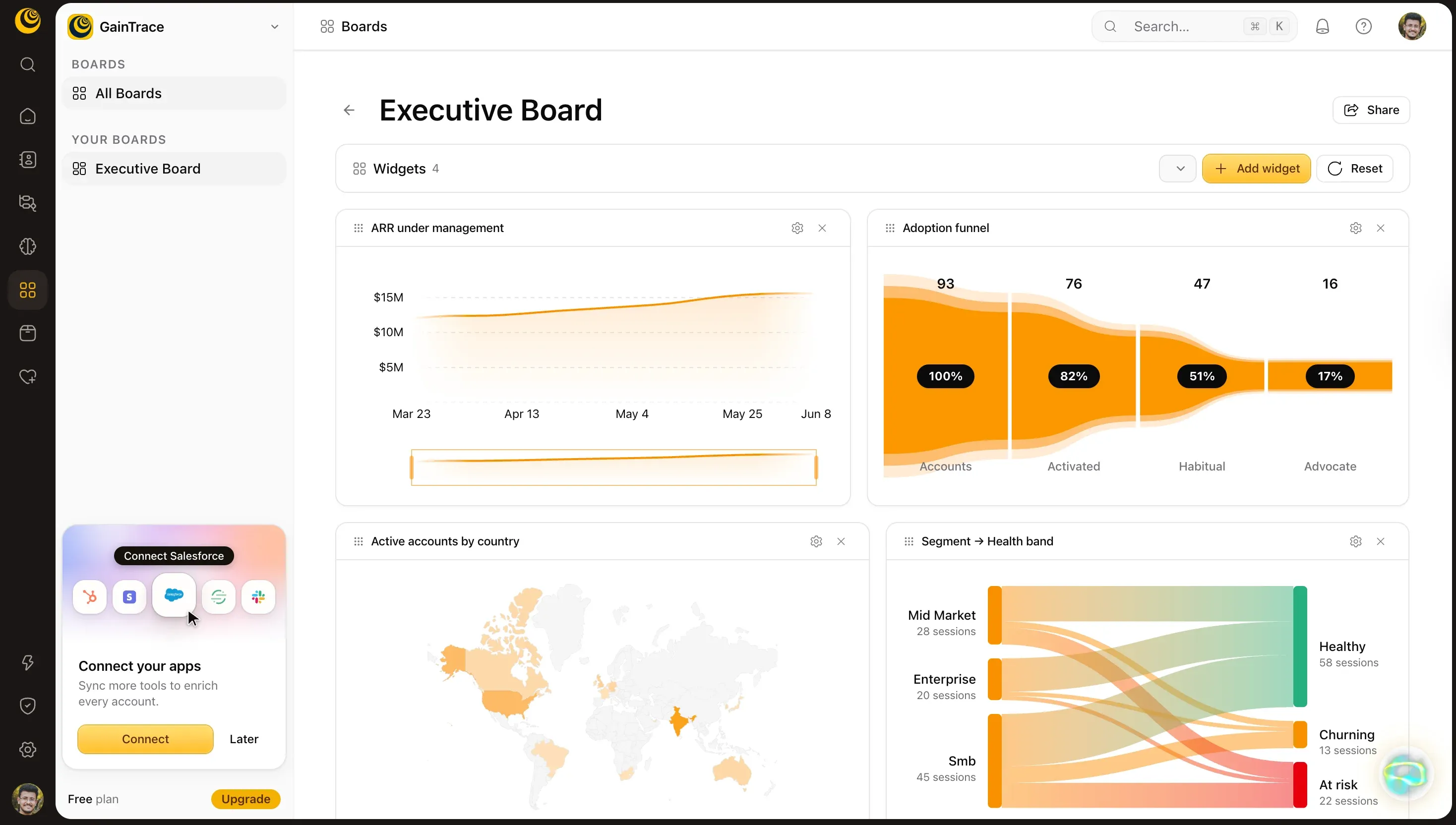
Key features:
- Single source of truth —> connects your existing apps to unify customer data in one view
- AI churn prediction & upsell surfacing —> flags at-risk accounts and expansion opportunities early
- Automated champion tracking & risk alerts —> monitors key stakeholders and warns when a relationship weakens
- AI account health scoring —> scores every account from multiple signals
- Customer lifecycle management —> runs the full journey, including QBRs
- Product adoption tracking —> sees how customers actually use the product
- Customer success playbooks —> standardizes the plays your team runs
- Reporting & analytics —> turns it all into board-ready insight
Pros: Champion tracking, which the other tools here do not; an early warning lead time ahead of score drop alerts; light and affordable at $199 a month, live in about a week with no admin; board ready output for a CFO conversation.
Cons: best fit is a scaling or mid market CS team, newer to market, with a growing integration library; the parity features (health scoring, playbooks) are not the reason to buy it, the AI revenue prediction is.
My take: What is true regardless of my stake: the leaky bucket in revenue is real and shows up in every exec review. A lightweight platform at Stage 2 and 3, and a revenue intelligence layer like GainTrace, when proving CS's worth becomes the actual problem. Because it is starts from $199 a month, and live in a week, some Stage 2 teams adopt it early to get ahead of the revenue leaking question, but its value compounds once that question lands.
ClientSuccess
Best for: A first CS hire who needs a structured system within their first week.
Pricing: Vendr data puts a typical contract around $450 a month.
ClientSuccess gets running nearly in about 4 to 8 weeks, which matters because a platform your first hire spends two months configuring has stale data by the time it goes live. It focuses on the workflows a Stage 2 team actually needs.
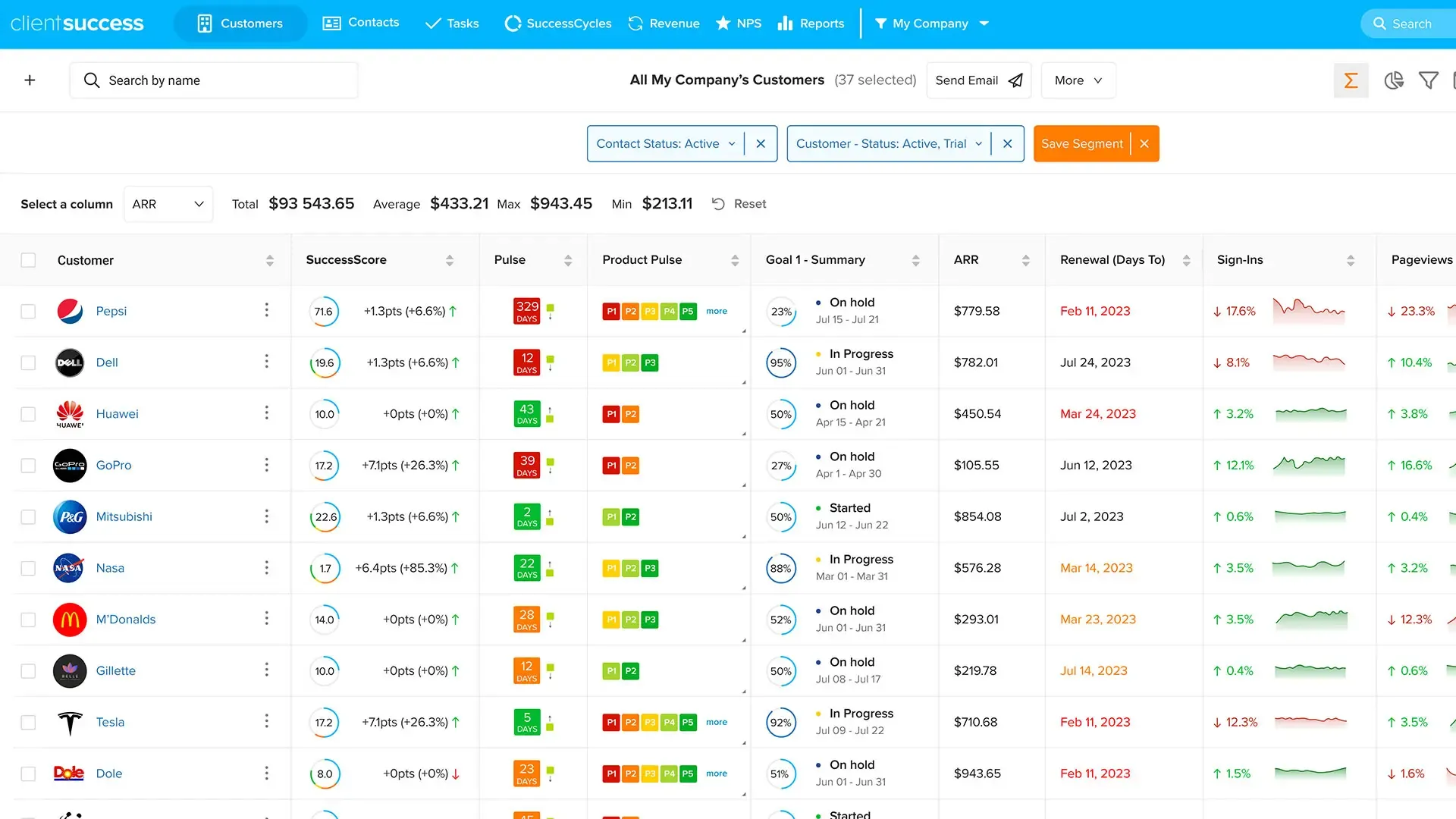
Key features: SuccessScore health tracking, a renewal timeline, task and playbook management, a communication log, and Salesforce and CRM integrations.
Pros: fast implementation; practical, renewal focused design; renewal risk always visible.
Cons: a smaller integration library than the bigger suites.
What reviewers note: a clean, simple interface, with a recurring theme that the feature set is lighter, and some teams move to Gainsight or ChurnZero after 12 to 18 months.
My take: the fastest platform here to stand up for a first CS hire who wants structure. There is no public price, so get a full quote before you commit; if it comes back above $500 a month, ask exactly what you are paying for.
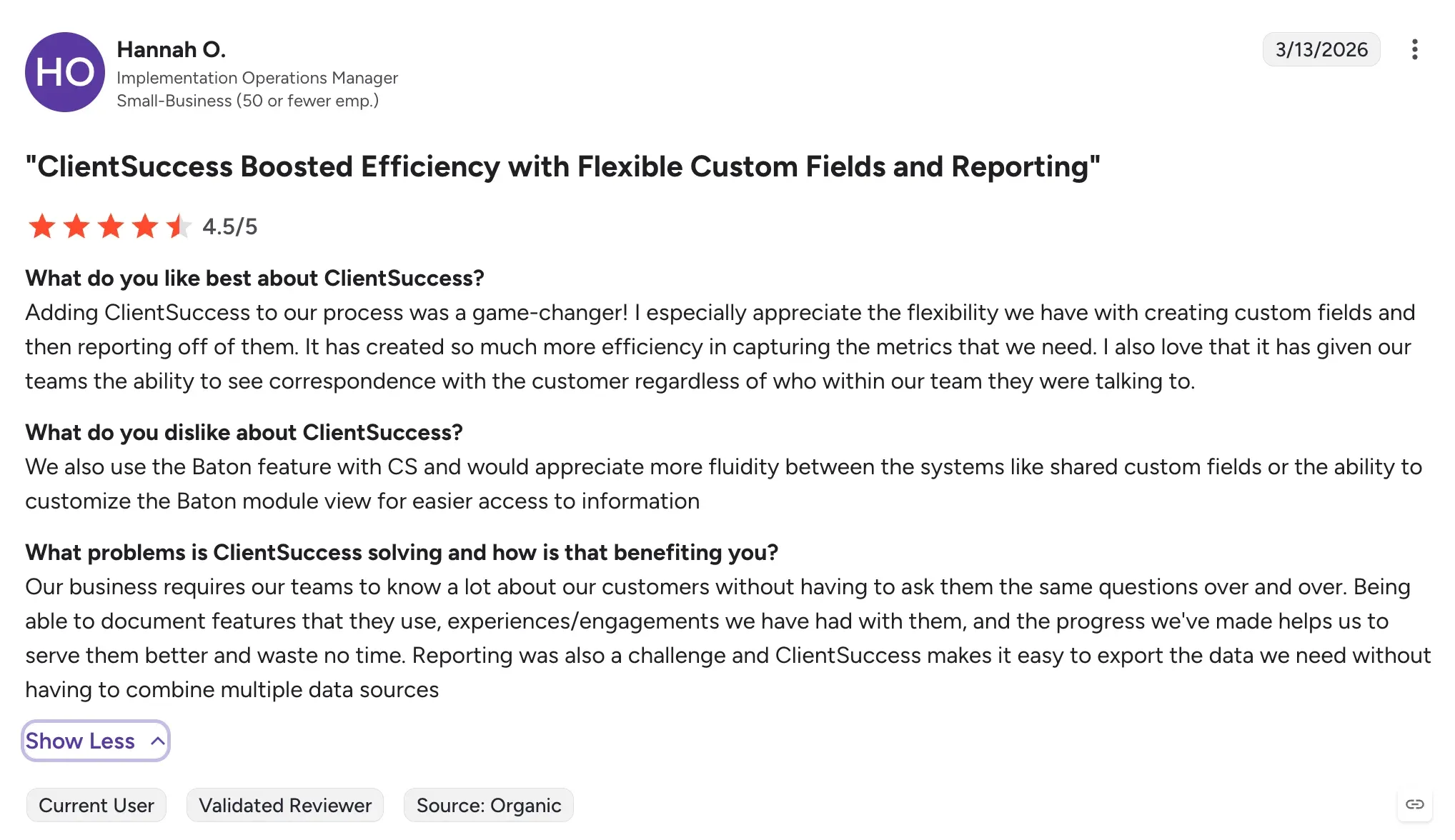
G2 rating: 4.4 out of 5 (~420 reviews).
Custify
Best for: Post Series A startups with a dedicated CS team and a low to mid touch motion.
Pricing: ~$899/month published starting price, with Vendr entry tier contracts in roughly the same range confirm the exact figure for your size. Be clear eyed: still real money for a pre-Series A team.
Custify sits above ClientSuccess in both capability and cost, adding deeper automation, more sophisticated health scoring, and reporting a CS manager can use in upward reporting. Around its entry tier, it is a fit once you are funded with a real CS function, not for a founder running CS part time.
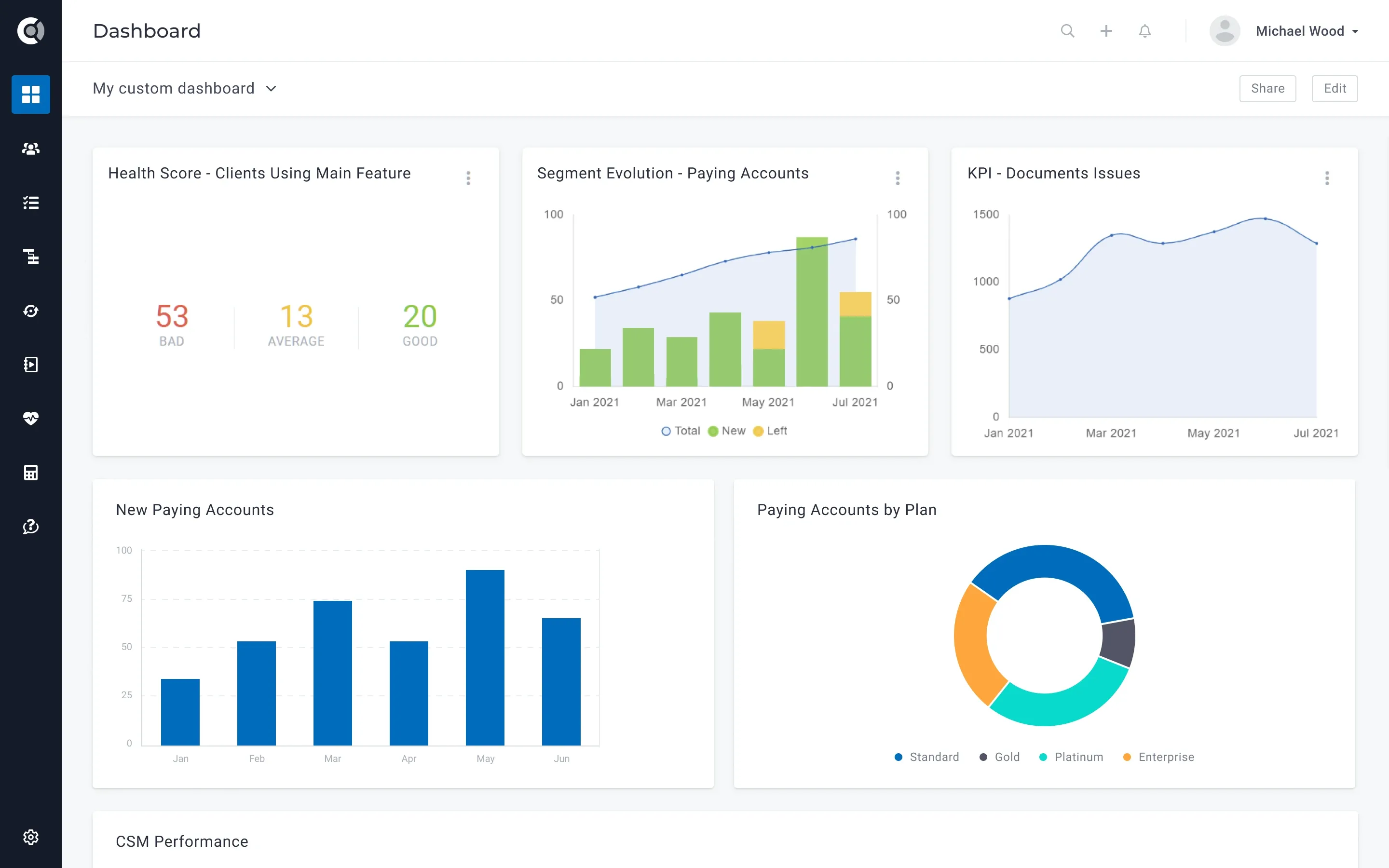
Key features: multi signal health scores, lifecycle automation, a customer 360 view, manager level reporting, and a segmentation engine.
Pros: more powerful than ClientSuccess at the sizes it serves; SaaS specific workflow design; reporting useful for managers.
Cons: cost is a real barrier preSeries A; implementation takes weeks.
What reviewers note: one of the highest rated platforms in the category, praised for fast concierge onboarding and ease of use.
My take: the right tool at the right stage, but only once you are funded with a dedicated CS team and a revenue number CS is protecting. If you do not have a CS manager yet, you do not need Custify yet.
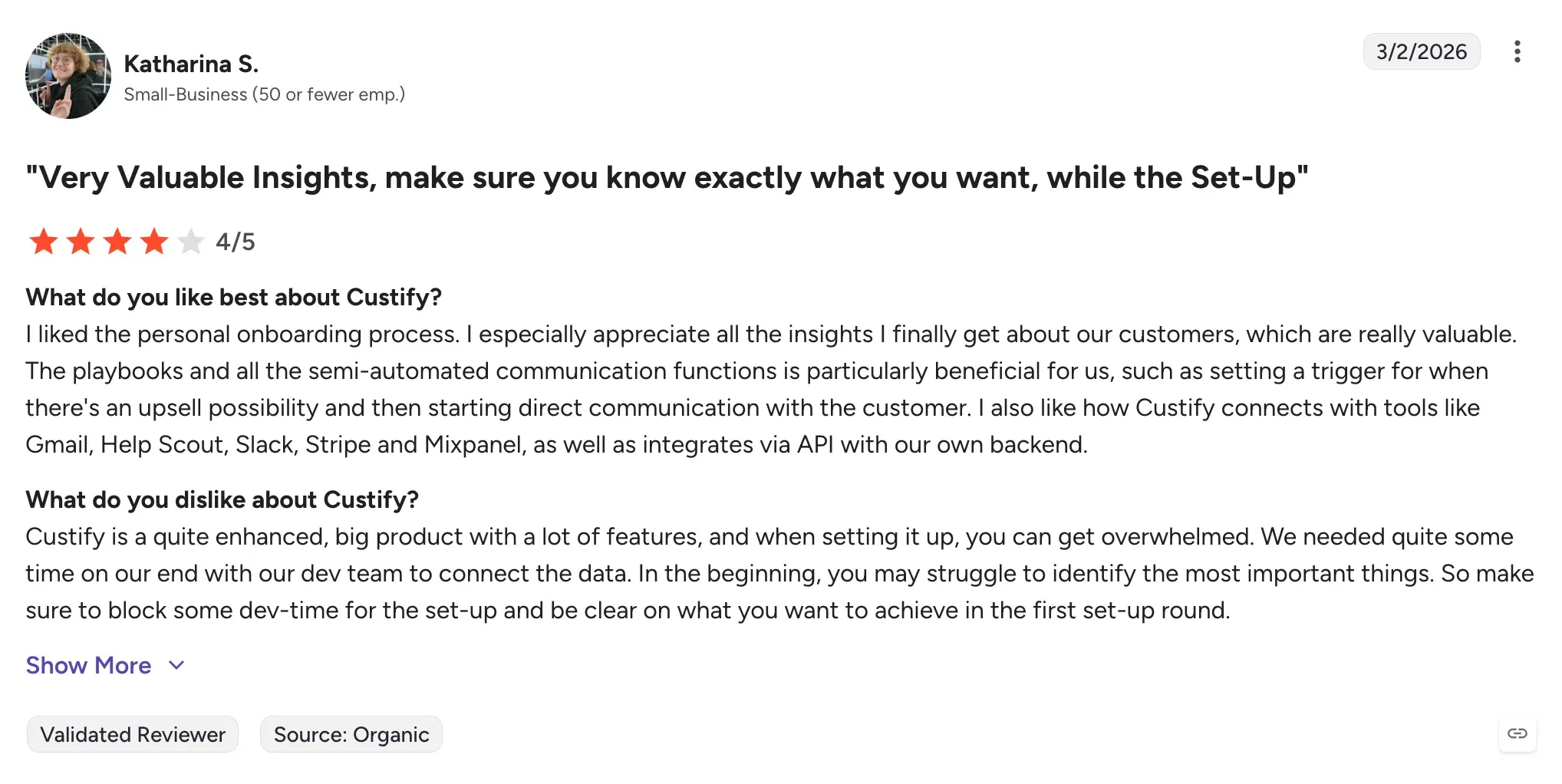
G2 rating: 4.7 out of 5 (~485 reviews).
Vitally
Best for: Scaling startups with a product led motion who need CS workflows alongside product data.
Pricing: Vitally's published Starter tier lists at roughly $1,500–$2,000 a month the scaling end of startup. Blended Vitally contracts run higher once you reach mid market volume.
Vitally is modern and well liked, and its differentiator is how tightly it weaves CS workflows with product usage signals, which matters if your CSMs act on in app behavior rather than tickets. Like Custify, it is a Stage 2 to 3 tool, not for a team still defining what health scoring means.
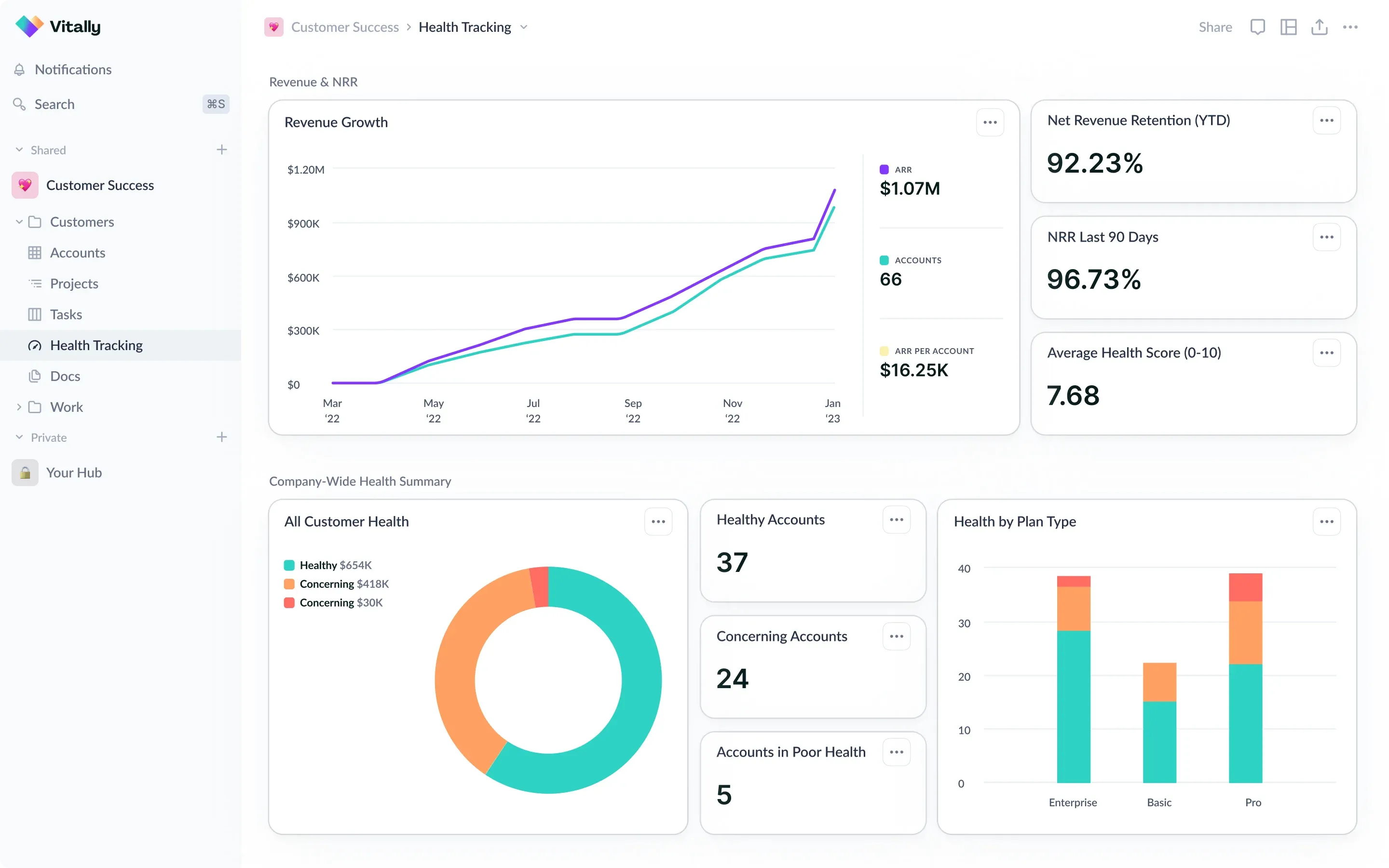
Key features: product usage as a first class health signal, configurable hub views, success plan docs in the platform, playbook automation, and manager analytics.
Pros: the best product data integration here for PLG teams; a clean, modern UI; docs where the work happens.
Cons: Vitally is not great at pulling historic monthly recurring revenue data.; Salesforce heavy setups can need custom work.
What reviewers note: strong analytics and a well regarded AI assistant, with PLG native design called out as a differentiator.
My take: worth serious evaluation if your motion is product led. If it is sales led or high touch, you are paying for an orientation you will not use; start with ClientSuccess and revisit.
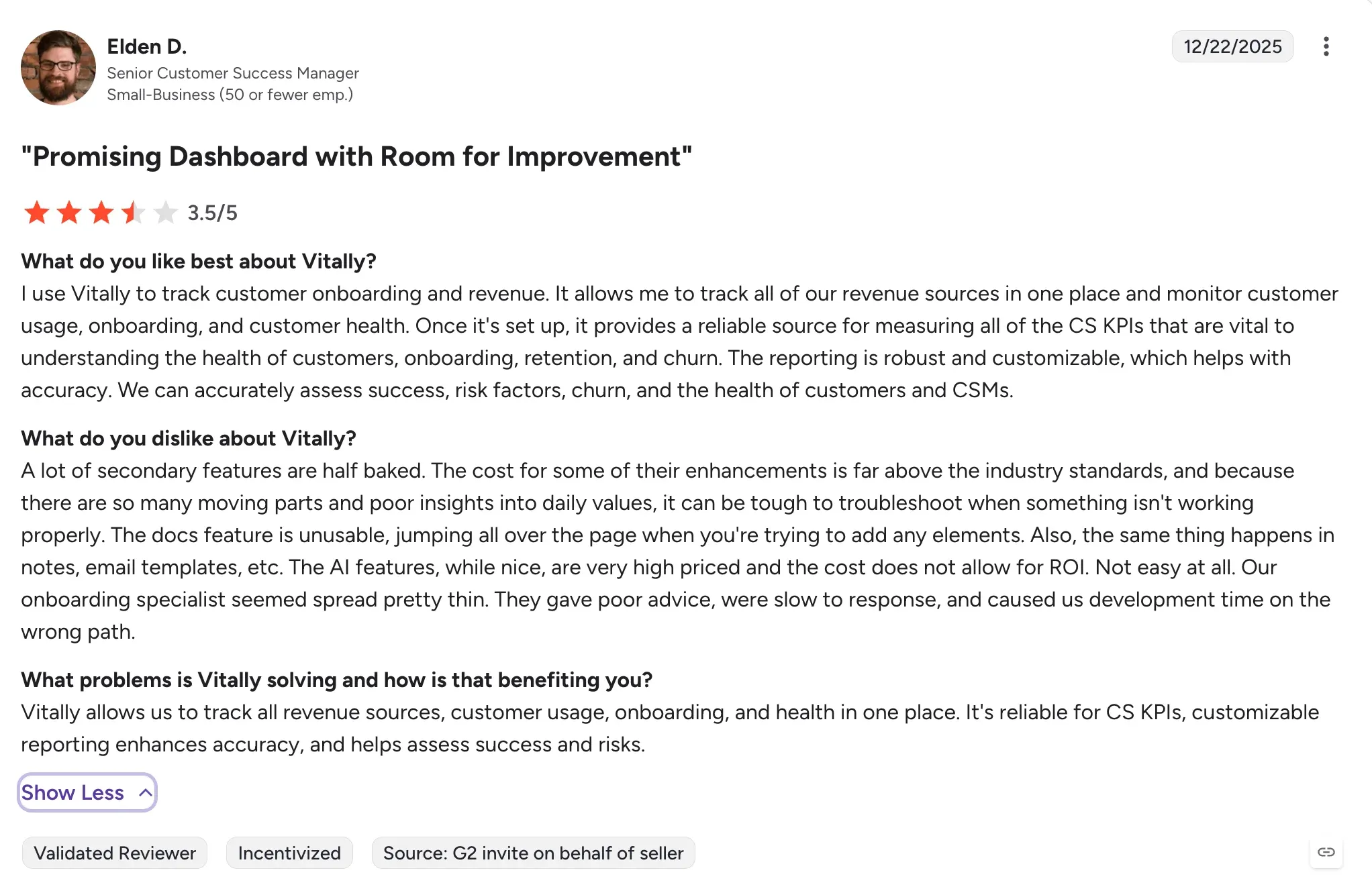
G2 rating: 4.5 out of 5 (~685 reviews).
Planhat
Best for: Mid market to enterprise teams with complex, multi product customer lifecycles and a data heavy CS function. Not an early startup tool.
Pricing: Vendr data puts a typical contract around $3,400 a month.
Planhat is a modern, data first customer platform and, for the second consecutive year, a 2025 Gartner Magic Quadrant Leader for Customer Success Management Platforms. It combines customer success, CRM, and revenue analytics on a flexible data model, which is its real differentiator: teams map custom health scores and customer journeys to their own metrics. That power is also the catch. It is built for organizations willing to invest in configuration, which puts it well past what an early startup needs.
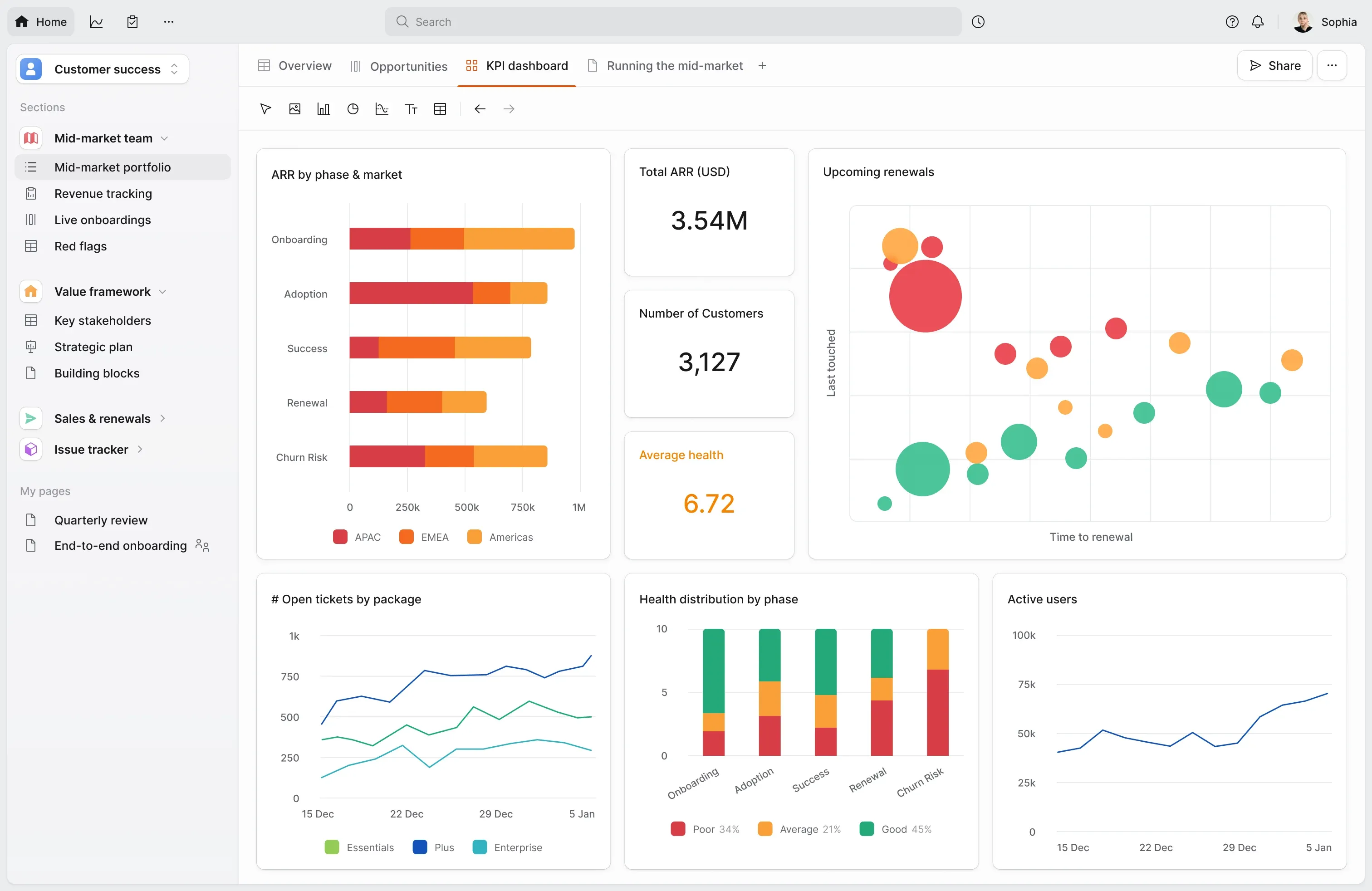
Key features: a flexible data model with custom health scores, lifecycle playbooks, revenue and NRR analytics, renewal and expansion management, and customer portals.
Pros: deep, flexible data modeling; strong analytics and revenue and NRR tracking; a modern interface; well regarded in mid market and European deployments.
Cons: implementation complexity is the most common criticism; configuration heavy, so it needs someone to own it.
What reviewers note: praised for data model flexibility and analytics depth, with setup complexity the recurring trade off, and positioned as a mid market fit.
My take: a genuinely strong platform, but a scaling company choice, not a startup one. Like Gainsight, it earns its cost once you have the team, the data, and the multi product complexity to justify it. For an early startup it is the wrong tier; revisit it when you are well past Stage 2.
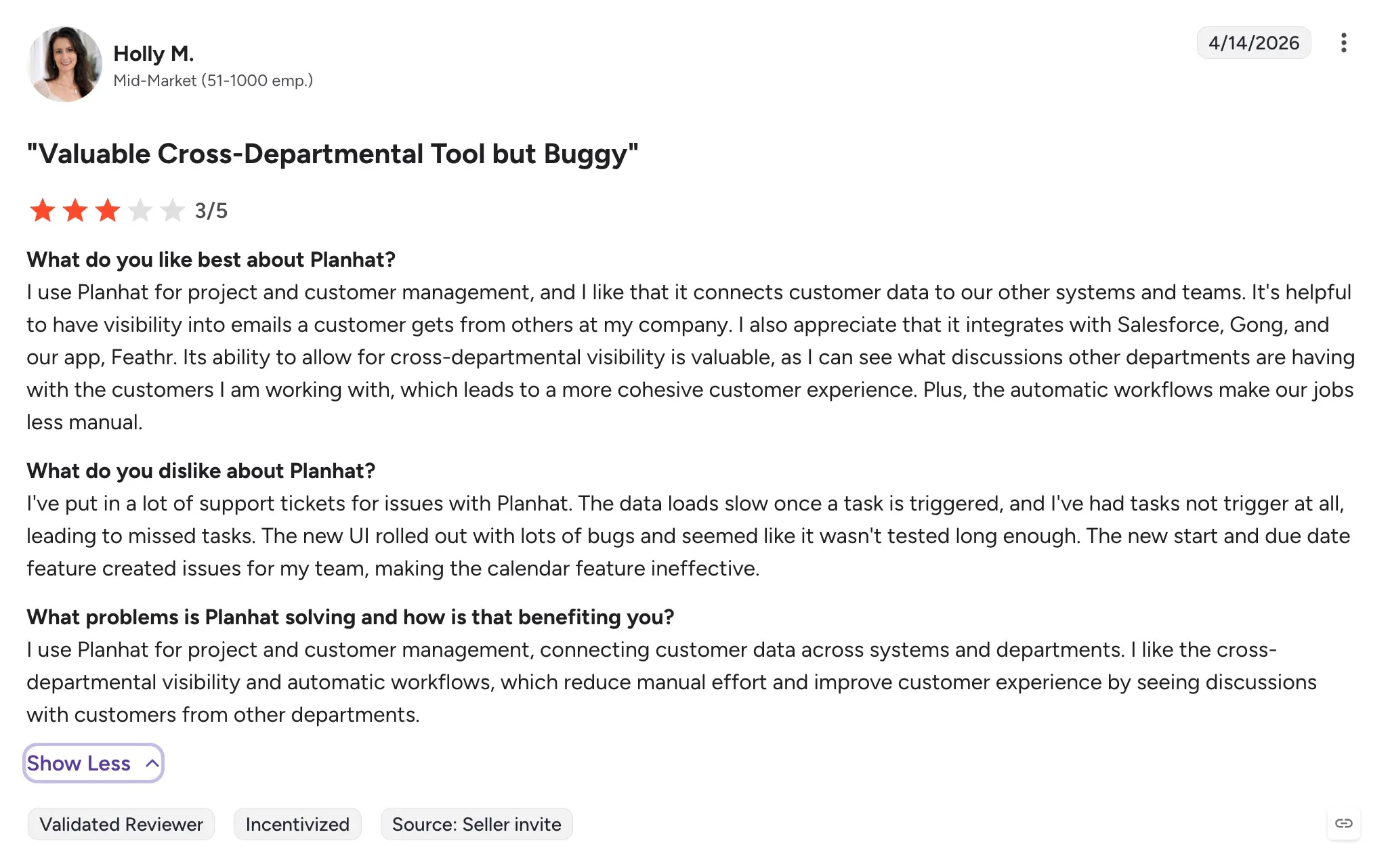
G2 rating: 4.5 out of 5 (~885 reviews).
Gainsight — skip for now
Best for: Enterprise teams with a dedicated CS ops admin, an implementation budget, and a Salesforce native stack.
G2 rating: 4.5 out of 5 (G2, ~1,600 reviews).
Pricing: a median contract around $50,000 a year (Vendr), ranging from roughly $13,000 to $14,000 for a single SMB seat to $200,000+ at enterprise scale, before implementation.
Gainsight is the deepest platform in the category and the enterprise standard. It is also expensive, takes months to implement, and typically needs a full time admin. For a startup, that is the opposite of what you need. Most startup friendly options land in the few hundred to $500 a month range; any quote into five or six figures a year is a signal you are being sold an enterprise tool too early.
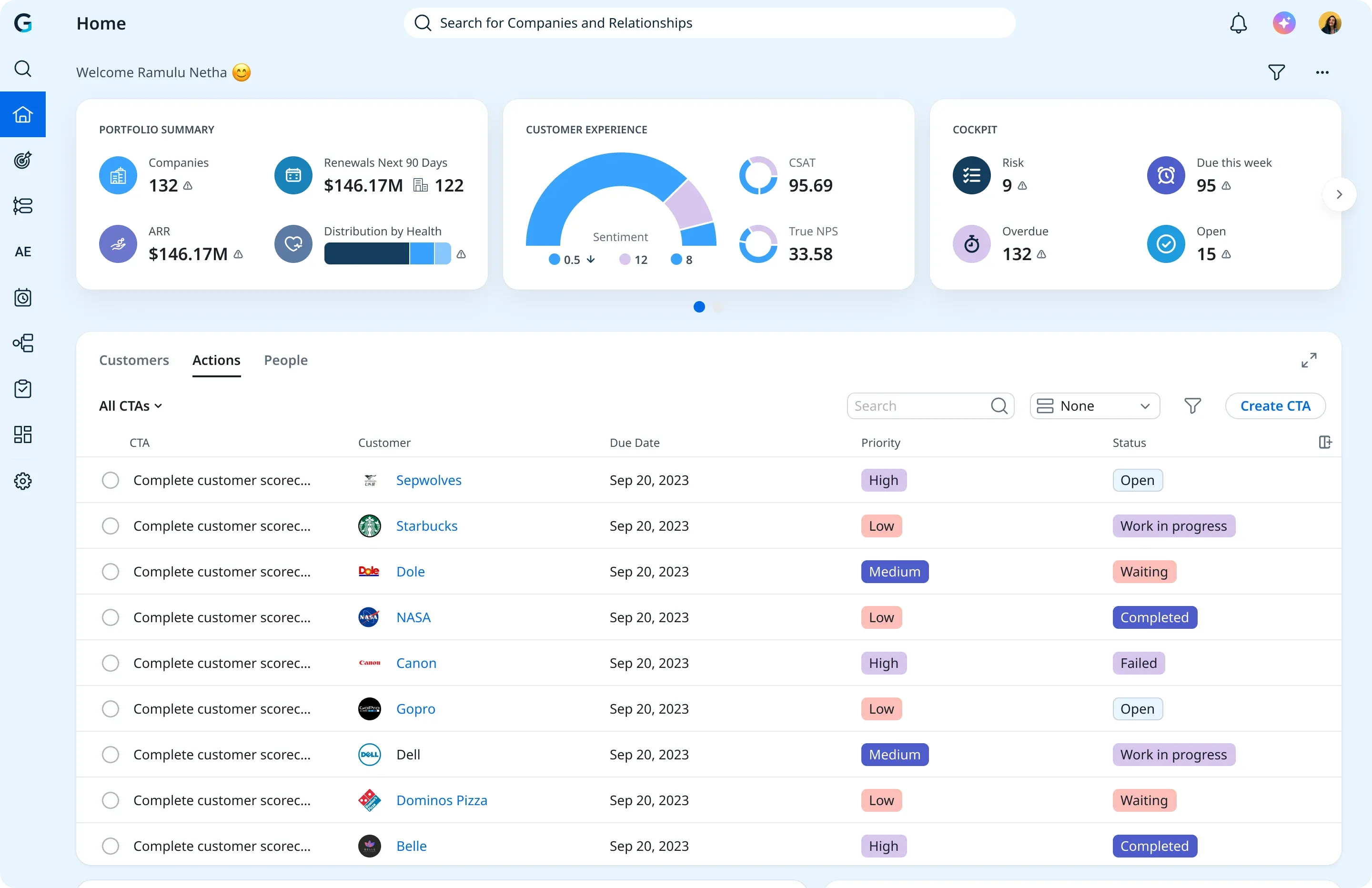
Key features: health scoring and analytics, journey orchestration, the broadest reporting in the category, and automation.
Pros: the complete platform; powerful Salesforce native integration; deep playbooks and reporting.
Cons: months to implement; needs a dedicated admin; enterprise pricing (median ~$50k/year, into six figures at scale); complexity only pays off with the team to use it.
What reviewers note: praised as powerful and complete, with complexity and the need for a dedicated admin the recurring trade off.
My take: file it under "for later." When you have a CS ops role, six figure CS ARR to protect, and a Salesforce stack, come back. Until then the overhead costs more than the features save.
How to choose the right platform
- Stage 1 (under ~50 accounts, no dedicated CS hire): do not buy a platform. Set up the free stack. It takes an afternoon and costs nothing.
- Stage 2 (50 to 150 accounts, first CS hire, a churn surprised you): of the paid options, GainTrace is the quickest to implement, starts from $199 a month and no implementation fee. ClientSuccess is fast conventional CS platforms (up and running in months) if you want a CS toolset.
- Stage 3 (mid market, CS must prove revenue to a CFO or board): Two tools fit here, GainTrace and Planhat doing different jobs. Planhat is the heavyweight if you are consolidating onto one data first platform at mid market or enterprise scale strong NRR and revenue analytics, but months to configure and someone to own it. GainTrace is the one that actually answers the CFO's question: it ties specific CS actions to the renewal and expansion dollars they earned, which Planhat's analytics approximate but do not do natively. For proving what CS is worth, GainTrace is the winner $199 a month, live in a week, no admin; its one real caveat is that it is a newer entrant with a growing integration library, so confirm your stack is covered. Because setup is so light, some Stage 2 teams adopt GainTrace early to get ahead of the revenue related question, and its value compounds once a CFO starts asking.
- If a vendor quotes far above $500 a month: ask what you are paying for that a startup priced tool does not cover. If the answer is features you are not using yet, it is the wrong tier.
Frequently Asked Questions
- Do startups need a customer success platform?
- Usually not in the first year. On the CS Maturity Ladder that is Stage 1, If you can do manully. A platform earns its cost at Stage 2, typically past 50 to 150 customers and once you have a dedicated CS hire. B2B SaaS logo churn runs blends to roughly 3.4 percent per month across ChartMogul ARPA bands, and it tends to show up in usage data weeks before the cancellation — which is why watching product usage early matters.
- What is the CS Maturity Ladder?
- A three-stage practitioner framework: Stage 1, the spreadsheet stage (0 to 50 accounts); Stage 2, the platform stage (50 to 150 accounts); Stage 3, the attribution stage (mid market). Each stage has explicit entry signals, not just account counts. Its main value is stopping startups from buying Stage 3 tools at Stage 1.
- How much do customer success platforms cost for a startup?
- The free stack costs nothing. Among paid platforms, GainTrace lists $199 a month; by Vendr's entry tier contract data, ClientSuccess runs about $450 a month and Custify sits near its ~$899 a month starting price, while Vitally's Starter tier lists at roughly $1,500 to $2,000 a month and Planhat runs about $3,400 a month with Gainsight around $50,000 a year at the median (rising into six figures at enterprise scale) plus implementation. As a rule, the lighter the tool and the lower the setup, the better the fit for an early team.
- When should a startup buy a customer success platform?
- At Stage 2: when accounts no longer fit in a spreadsheet, a churn surprises you, a dedicated CS hire needs a system, or you are past 50 to 150 active accounts and still growing. The trigger is internal strain, not a vendor pitch.
- What is the difference between customer support and customer success software?
- Support is reactive answering tickets and resolving issues after they happen. Success is proactive driving adoption and catching churn before the cancellation. Intercom and Zendesk are support tools; ClientSuccess, Custify, and Vitally are success tools.
- What is the attribution gap in customer success?
- Every CS platform tracks account health and activity, but none natively ties the renewal or expansion revenue you protect back to the specific CS actions that earned it. That gap is much of the difference between a median NRR around 106 percent and top teams above 120 percent, almost all of which is expansion revenue CS drives but cannot prove. Expansion now accounts for 40 to 50 percent of new ARR at high performers (High Alpha, 2025), rising to 58 to 67 percent above $50M ARR (Benchmarkit). And the spread is a valuation story: public SaaS above 120 percent NRR has traded at a median 11.7x EV/revenue, versus 6.0x at 100 to 110 percent and just 1.2x below 90 percent (Software Equity Group, 2025 Annual SaaS Report) those are 2024 multiples and the market has since compressed, but the gradient is the point: retention you can grow commands a multiple several times higher. It becomes the central problem at Stage 3, when a CFO asks what CS is worth in dollars. That is the gap GainTrace closes.